
If you’re sensitive about finding trash in nature, you’ll be familiar with some or all of these common feelings: anger, disgust, perplexity, sadness, frustration… Chances are you have wondered what you can do to avoid this happening and you have probably taken action some time, scale big or small.

Banana peel, a timeless classic
This is an analysis of the issue together with some possible action points.
Picking up
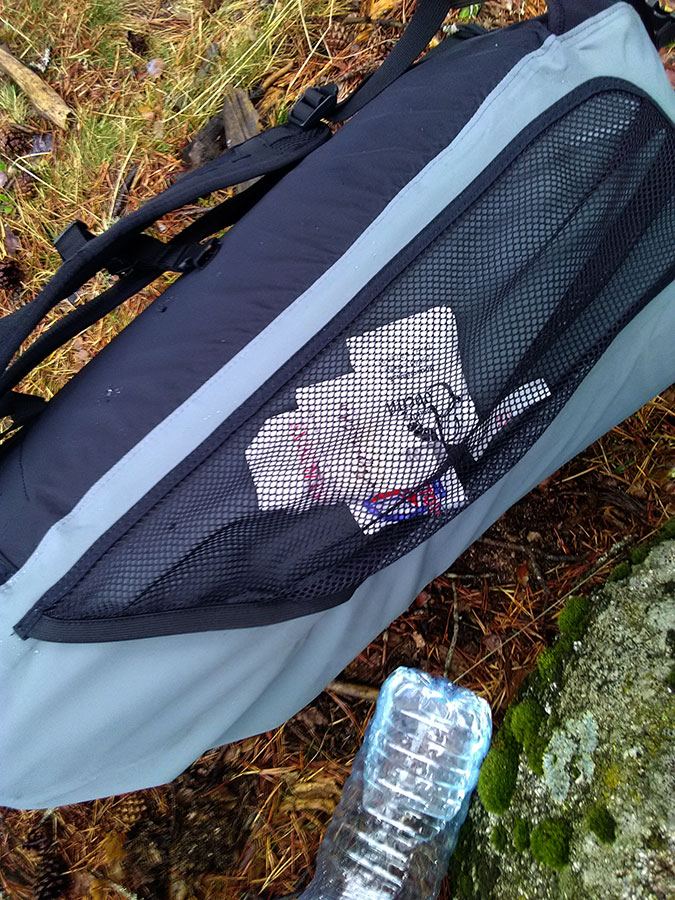
Picking up
This is probably the very first impulse for those who care but is it the best thing to do? Sometimes, always? It may look like a no-brainer if we think nature-first but it may also portray a wicked message: there’ll be a cleaning service behind litterers, shifting responsibility from them onto others.
Take care of yourself
There’s another twist: no matter how much you pick up, you won’t be able to do it all. You’re out there to enjoy nature and if you want to take care of it, you need to take care of yourself too. Not that both things are mutually exclusive but it’s important to have one thing clear: you may leave somebody else’s trash behind sometimes and you shouldn’t feel bad about it.
Public exposure
Picking up trash has an obvious intrinsic value but you can multiply your positive impact by letting the world know, showing what you do, putting your mouth where your heart is.
This is real quicksand. Lecturing the world is rather useless, often counter-productive if it only works to make litterers feel guilty.
Public exposure works well when showing positive action. Do something nice, do it for nothing and let others see you doing it. Positiveness sells much better.
Why
This is the key question. If you mean to solve a problem, you need to understand the root cause. Why they do that? It’s a difficult question and what follows is my take at an answer and the key section of this text.
Sense of belonging
I can imagine litterers won’t litter everywhere so here’s the obvious question: where’s the difference, where do they draw the line? I can also imagine they won’t litter the place they call home. Somewhere in between home and nature, something changes. It may be as trivial as the physical aspect of not sharing close quarters with trash but I believe there’s also a psychological thing going on here about taking care of the place where you belong.
If home is where your heart is, some people’s hearts must be rather far from nature.
Responsibility
It works hand in hand with a sense of belonging. At home, not only you’d need to wade through your own trash if you threw any, it’s also that you know it’d be there forever unless you pick it up. People who trash nature withdraw from their responsibility of keeping it tidy.
Responsible people will litter less.
Value
We tend to take care of the things that we perceive as valuable. Litterers probably don’t see much value in the place they trash, whichever it is.
In nature, infrastructures are at the core of the value issue. Infrastructures turn nature into a commodity, they deprive nature of its core values. When you just drive all the way in, take a cable car to the top and spend the night in a summit hotel, you don’t get the true value of nature. You will never take care of something whose value you’re not aware of.
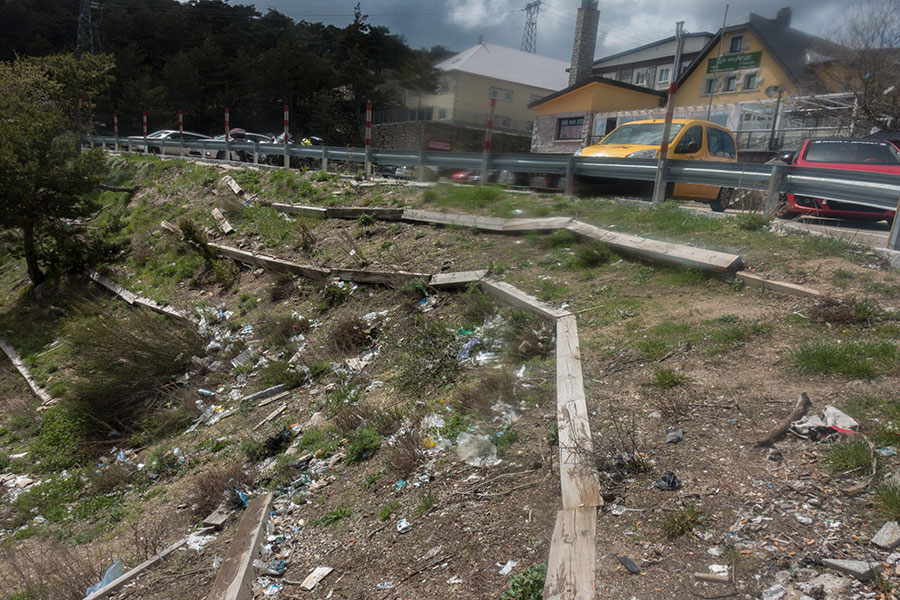
Roadside mess in a popular trailhead
If you want to see less litter, work towards preserving nature free of infrastructures, help people appreciate it for what it is. People is not as dumb as it sometimes seems, show them what nature is about, they will understand.
Social scene
Littering is a sign of malfunction at a social level. Littering, both in nature and in general, is the less common the better balanced a society is. When society takes care of its people, the people will give back. When people feel society has let them down, they will strike back somehow. This is a very karma thing that’s at the core of every littering problem.
Take the amount of litter on your backcountry as a sign of the social health of your country/region.
People who trash nature have some underlying problem. The best way to help nature is to help them. If you want to work towards a trash-free place, aim for equality and general well-being at the wide scale. It will work.
 RSS – Posts
Say what you want