
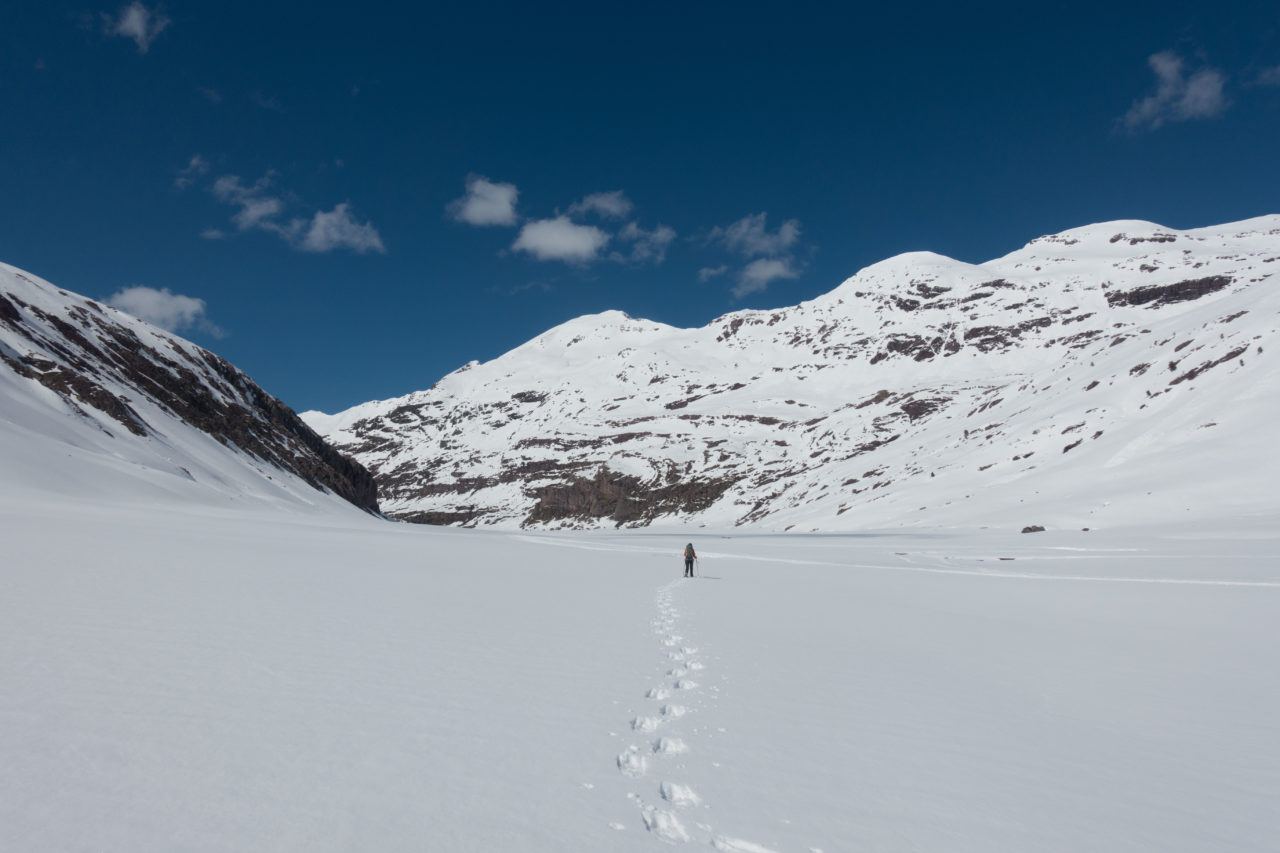
The Hecho valley is on the Western Pyrenees. It’s the westernmost pyrenean area of consistently dramatic mountain scenery and some features make it special: there are no through roads across the range and there are no ski resorts. It is a wild and quiet place. What the mountains are meant to be.
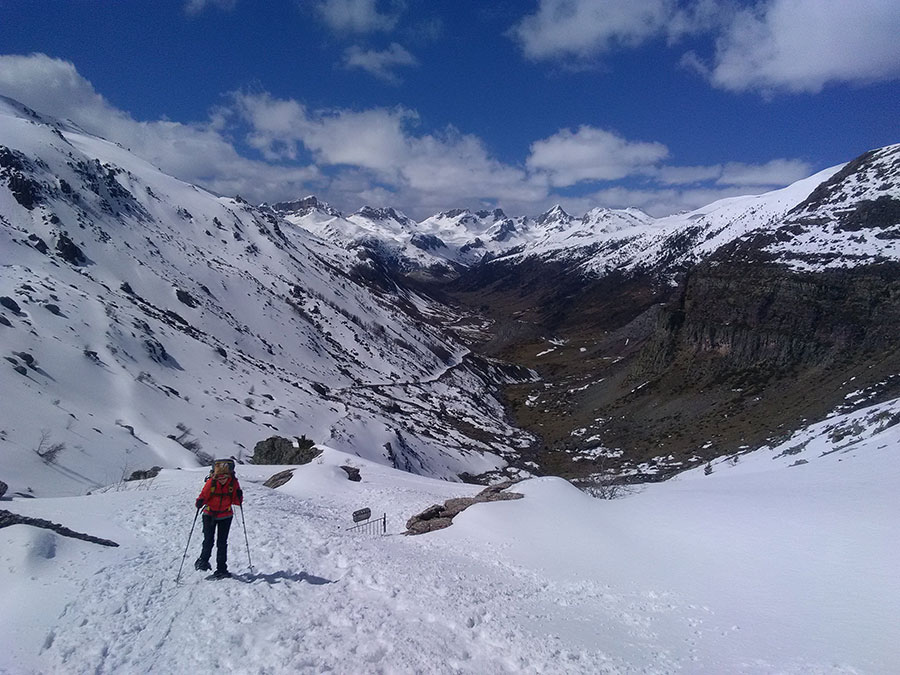
The Western Pyrenees
We spent the Easter weekend playing around the area. This is a brief description and an introduction to a place that matters.
The settlements
There are four villages in the main valley, one more in a side valley. It’s a transition region between Atlantic and Mediterranean climates with forested slopes and cultivated flats, not very different to the untrained eye from many other areas across the Iberian peninsula except for one thing: the Aragon-Subordan river flows wide and mighty. It’s a sign of some big stuff upstream.

Hecho valley villages
The pic shows the Siresa and Hecho villages, highest settlements in the valley. Scenery wise, everything changes going north.
The Gorge
The road narrows as it proceeds upstream towards the vertical rock walls and towering peaks that close the valley. It would look like that’s the end of it but the river dug a narrow passage along a deep gorge with vertical walls and no elbow room. Here the Romans built a trunk road that would farther ahead climb across the main divide into today’s France. The roman road would take the path of less resistance climbing over the available shoulders above the steepest rock walls. This section of the roman road is still visible today and it’s been recovered as a hiking trail.
The modern road however was blasted off the rock walls, making for a less discrete but more level and scenic way through.
You can walk this road. It should be very quiet, traffic wise and it’s truly spectacular. The pic belongs to the less deep section of the gorge but you get the idea:
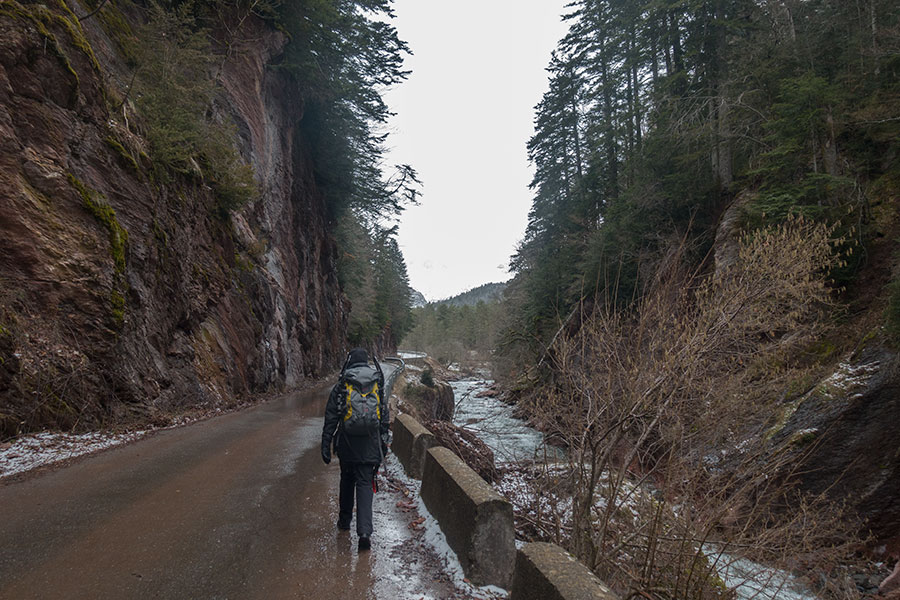
Last of the gorge
Whatever the means of transport, you might wonder what comes next. Then everything changes again.
The Woods
You emerge from the gorge into a wide, thickly forested valley. This is the Selva de Oza which would roughly translate into the Oza Jungle but forget about anything tropical, this is a magnificent case of Atlantic woods with a mix of fir and beech trees. Big trees.
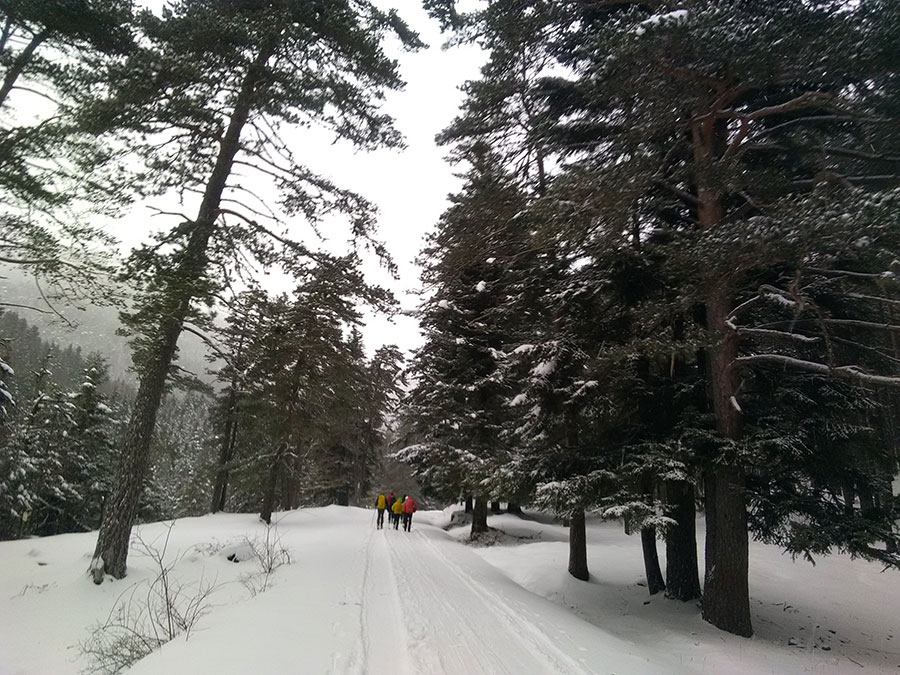
The Oza woods (pic from mid February)
Arriving in the Selva de Oza feels like entering a lost kingdom, a sheltering valley cut off from the rest of the world, protected by high peaks on all sides.
Unfortunately it’s not without human impact, there’s a lodge & campground plus a youth camp, a few buildings altogether. No acute urbanization but together with the road it does take away the wilderness feeling and a good part of the quietness, depending on how busy the day is.
Focus on the woods: if you’re lucky, it’ll be sunny beyond the peaks and the beech trees will filter the light as only they can do. If you’re even luckier, it’ll be raining and the woods will be singing the rain song.
The Oza woods sit in a bowl surrounded by big mountains all around. Going north, the way out narrows albeit not as dramatically as on the way in. Eventually, you’d emerge from woods and narrows onto open land and a confluence of valleys backed by the main pyrenean divide.
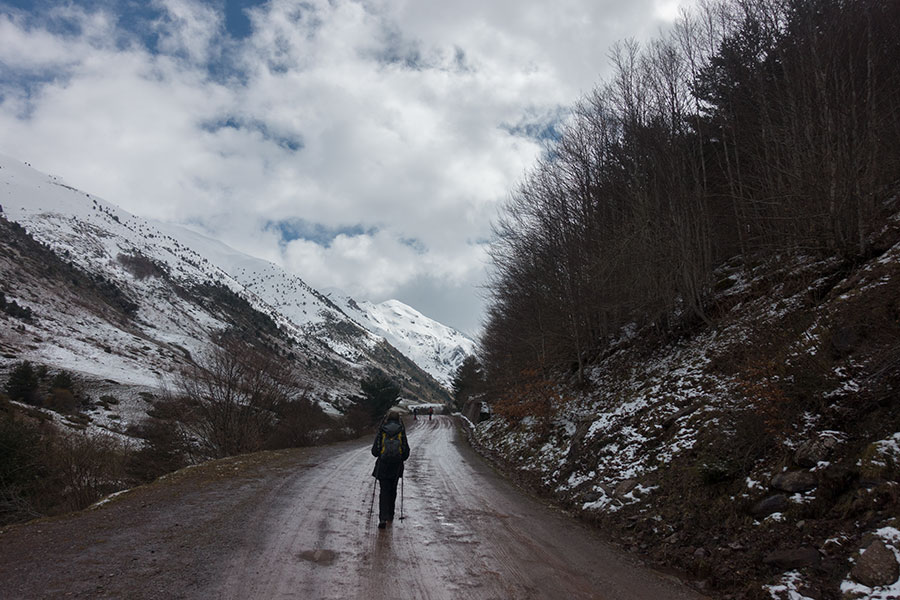
Leaving the woods behind
The High Valleys
This area is called La Mina (The Mine), I don’t know the history behind that name. Here there’s nothing else in between you and the high mountains, not even trees, which remain confined to the north-facing slopes and quickly diminish in size.
There are endless choices for routes from La Mina. I find of particular interest to follow the main water course, it’s like a trip as deep as you can go into the heart of the place, a quest for where it all begins. It’s usually also the path of less resistance, and clearly so in this case as the Guarrinza section of the main valley is level, straight and has a dirt road as it parallels the main pyrenean divide in a course due east.
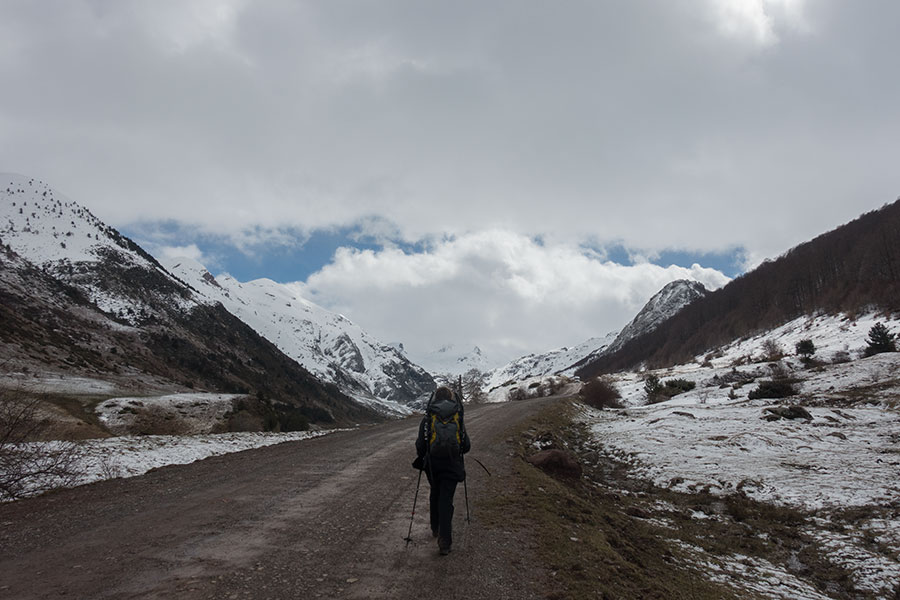
Guarrinza
In this particular visit, March 2018 I was puzzled to find cars here. I would have thought this section of road was closed to public motorized transit. It takes nowhere but the mountains and there’s not even trailhead parking nor many places to pull out but open we found it.
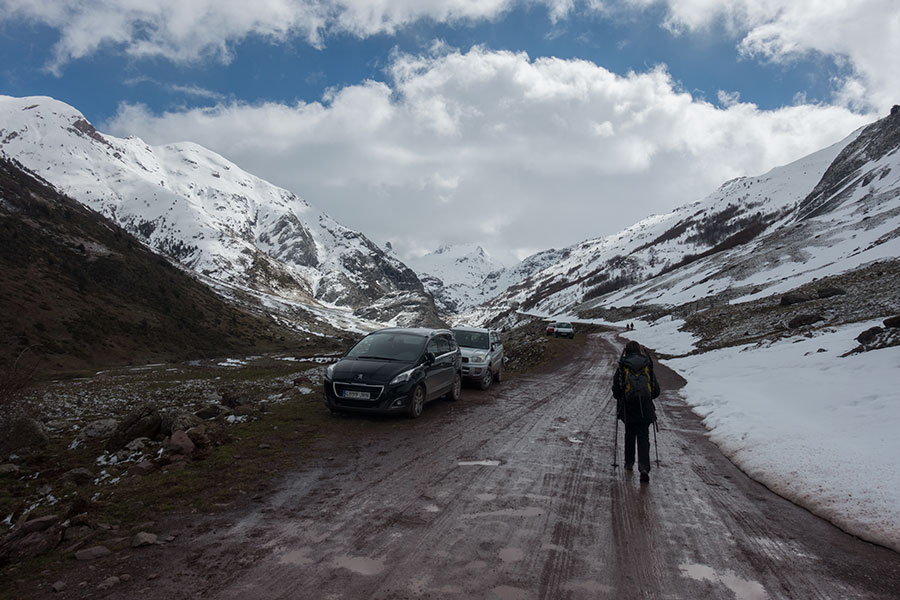
Puzzled by the presence of cars
If there’s an open road, there’ll always be someone ready to drive on it. Traffic is scarce and slow moving but the presence of cars completely spoils the experience for those on foot. Cars don’t belong here and I’ll say it again: Cars don’t belong here.
Eventually, there’s a gate and no more cars. Snow is taking over anyway, hiding the switchbacks at the far end of the Guarrinza valley as the dirt road climbs the step closing the visible horizon.
If it’d be my first time here, I’d be walking this road anyway because I’d want to follow the valley and find out what’s ahead. Now that I already know, I keep wanting to walk this road so I can see Aguas Tuertas again.
Aguas Tuertas
The name would roughly translate into Crooked Waters. It’s the final stretch of the Aragon-Subordan river valley as it flows from its source along a glaciated, straight and flat section where the river meanders like undecided as to which direction is best.
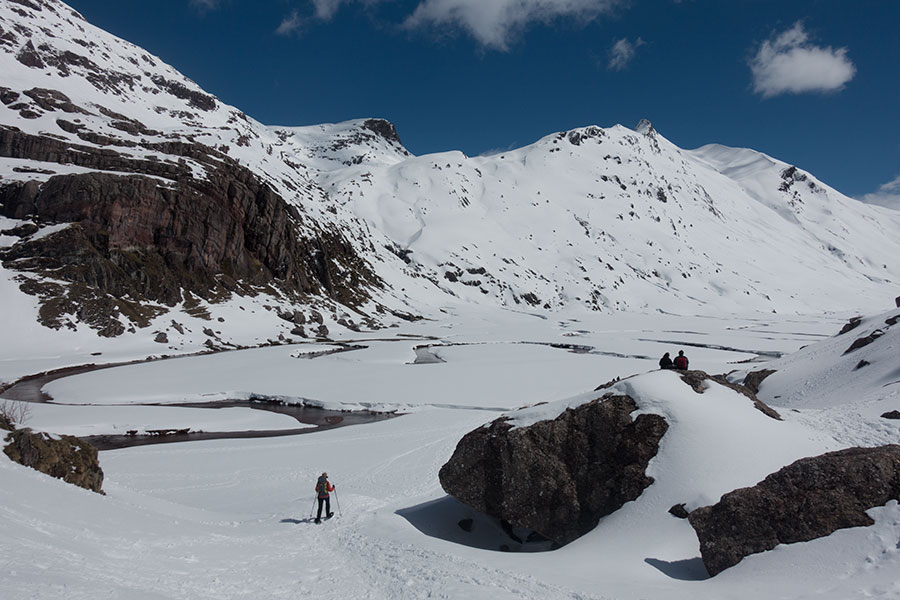
Aguas Tuertas
In this late winter scene, Aguas Tuertas is immaculate white, that immaculate white you feel sorry to tread on, except that it’s late afternoon on Easter weekend and there’s already been an army’s worth of snowshoes across the place. Still it’s so beautiful that is almost unbelievable. Here’s proof:

The immaculate white
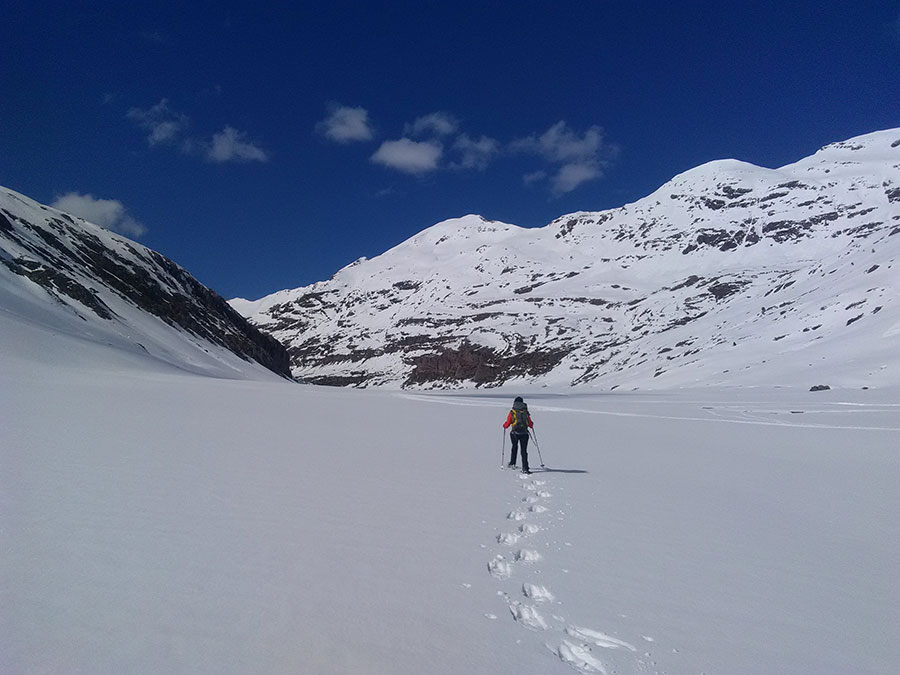
More of the immaculate white
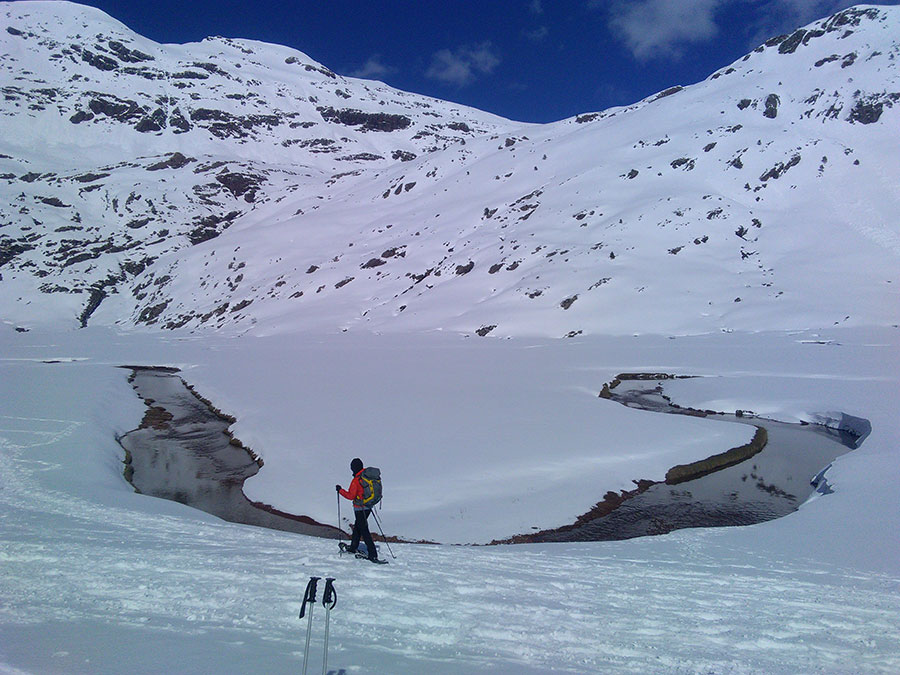
River bend
I remember the many times I’ve been here in the past. I remember this was the very place where I did my first ever winter camp, innocently equipped with a tarp that took me ages to pitch in the barely consolidated, deep snow. I could have probably made a better shelter choice but I couldn’t have possibly made a better place choice.
The area is much busier this time around, being Easter weekend but by the time we settle for lunch and contemplation, most mountaineers are already gone. It’s peaceful, quiet and overly awesome.
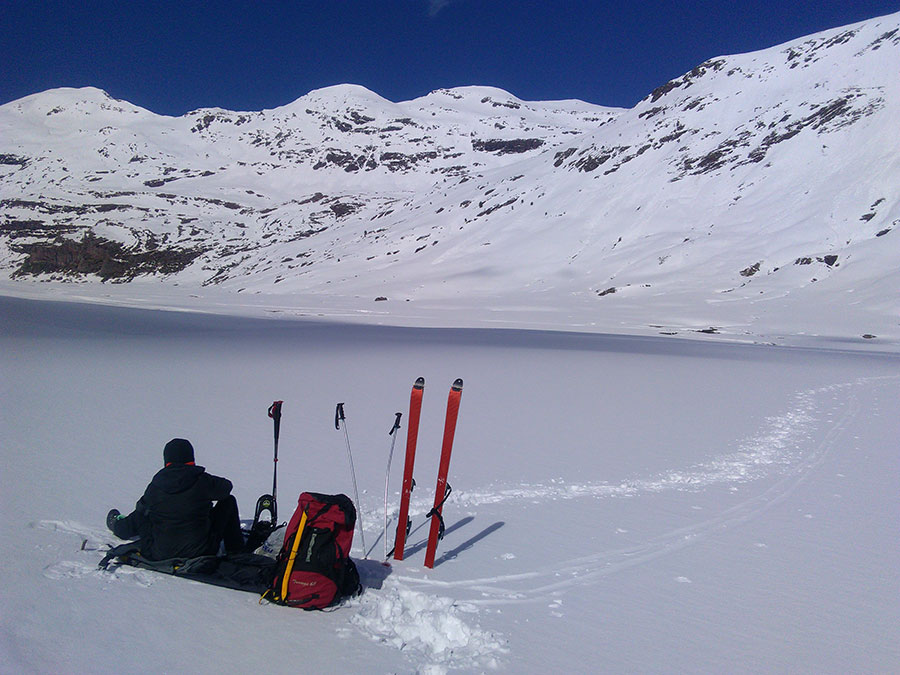
Lunch spot
It’s a long way back and we must go. No matter how many times you did look back on the way in, it’s a different view when proceeding downhill and I have the chance to slide down the crusty snow in front of the most amazing scenery of the Guarrinza valley, the snowline and the high peaks of the western Pyrenees.
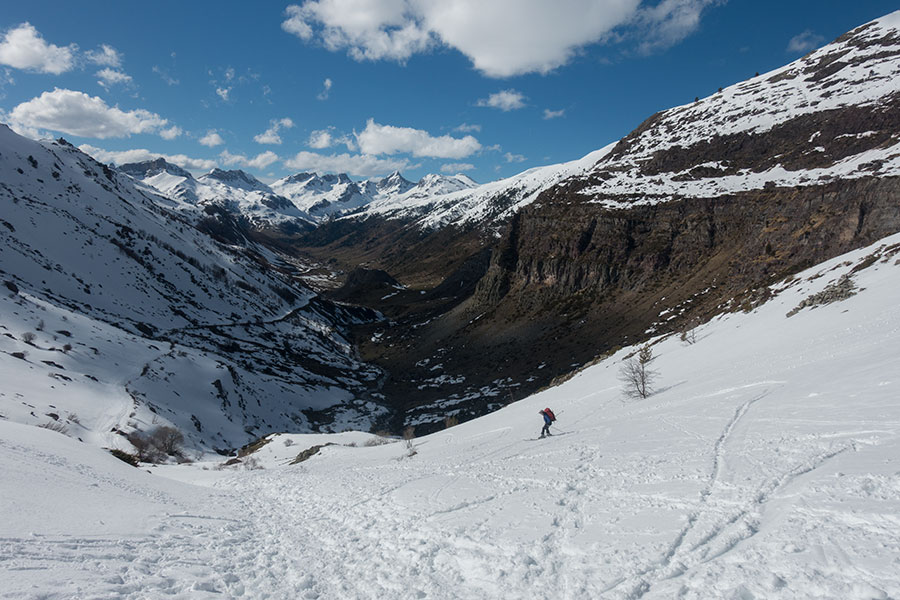
Skiing down in postcard scenery
Oza
It’s a beautiful experience to climb across such different environments and see the world change as you go, it’s equally interesting to go back down and reverse the process, leave the snow behind, enter the woods and feel the giant walls of the Alano range closing the valley as if there’d be no way out.

The Alano range walls closing the valley
Water found a way, the Romans followed through and now we do too.
Siresa
The highest village in the Hecho valley is a stone wonder built around an ancient monastery of which only the massive church remains. A remarkable, impressive building.
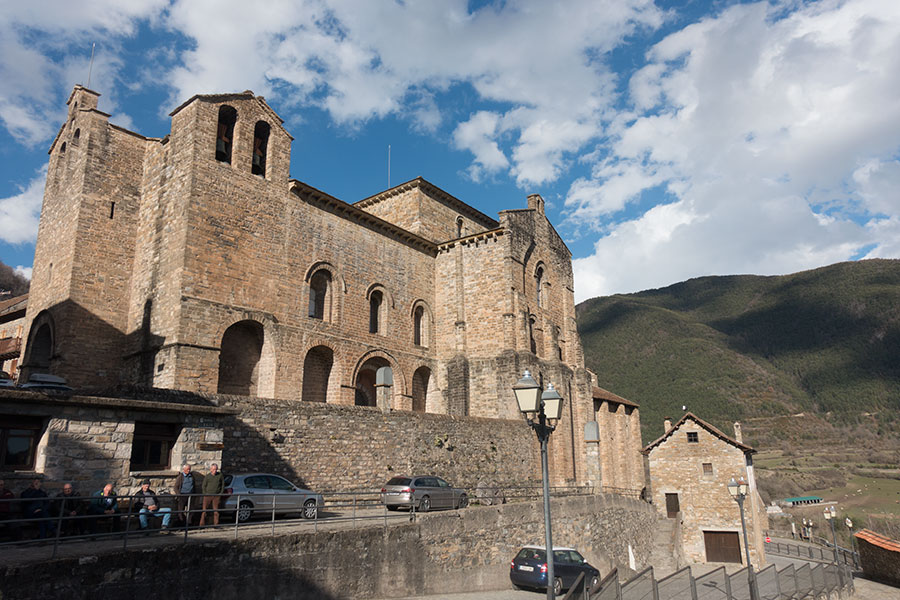
The monastery under the sun
The traditional ways of life are fading but here you can still see the elderly sitting on the bench, spreading wisdom.
Late march is still winter in the pyrenean valleys and the next day Siresa wakes up white under a big snowstorm:
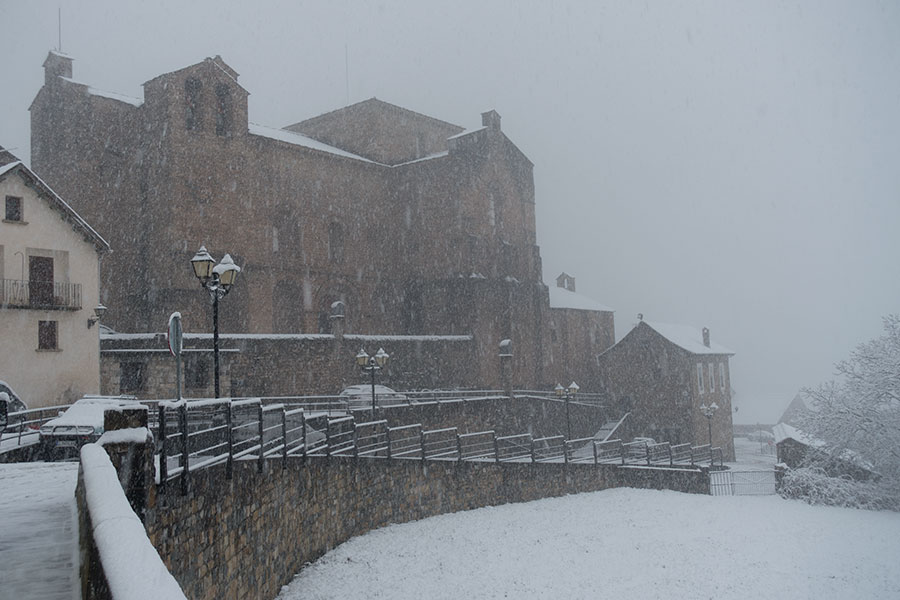
The monastery under the snow
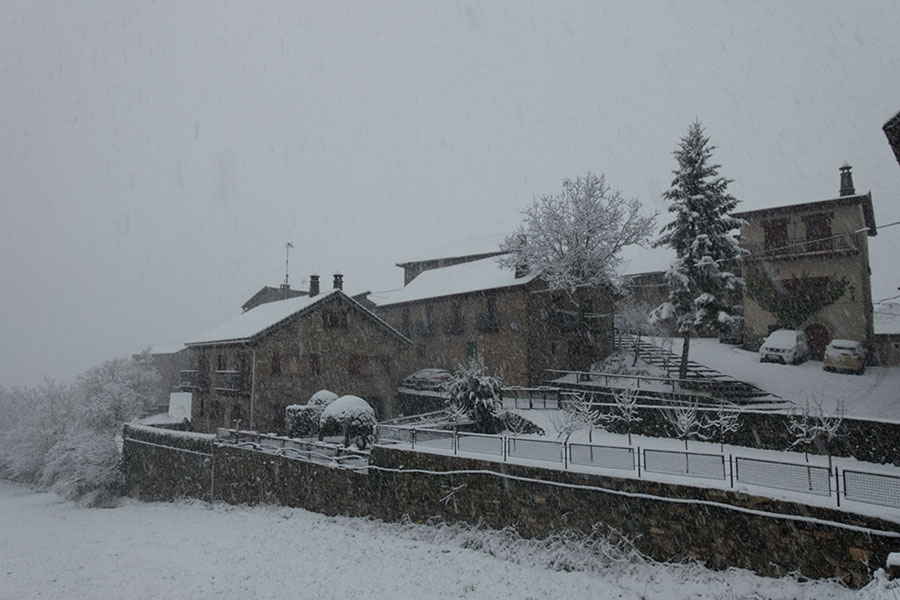
Siresa village
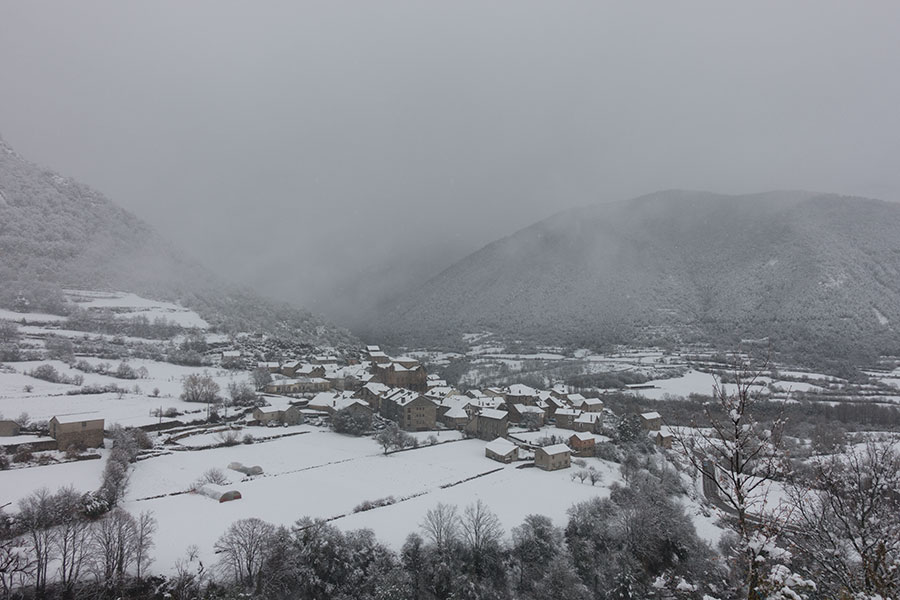
Siresa village
The weather guides us to a low level route in deep, new powder over the nearby hills. Nobody around this time, no prints in the snow except our own.
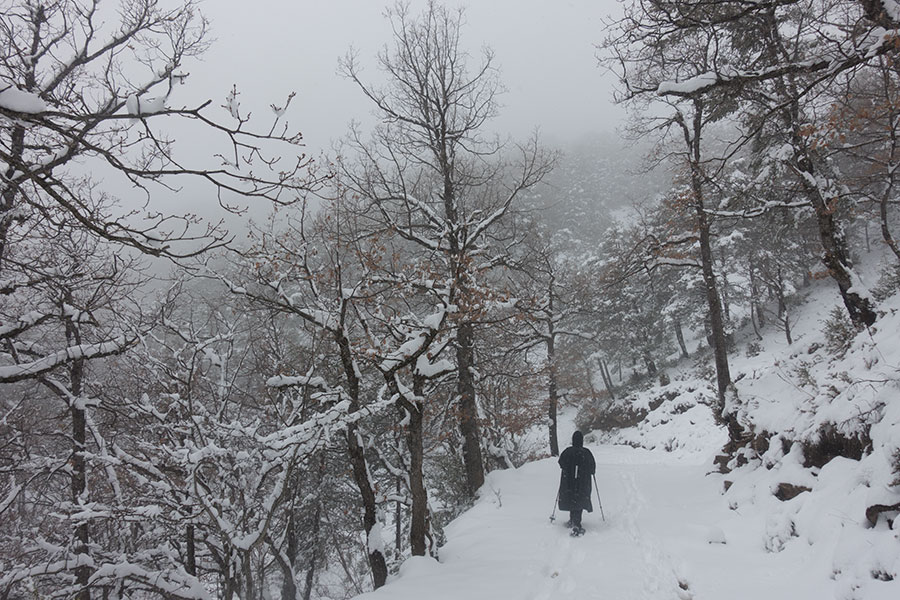
New snow
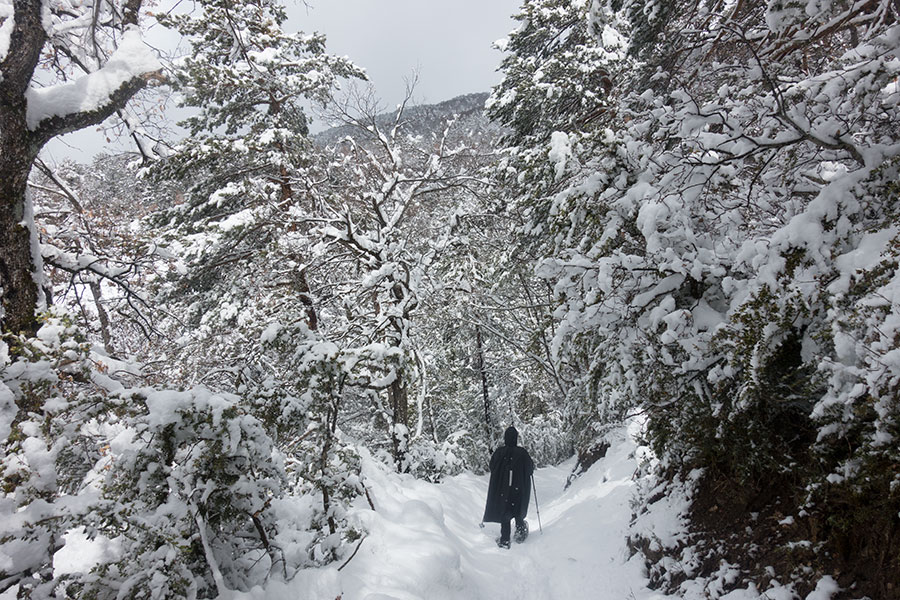
New snow and a brief sunny spell
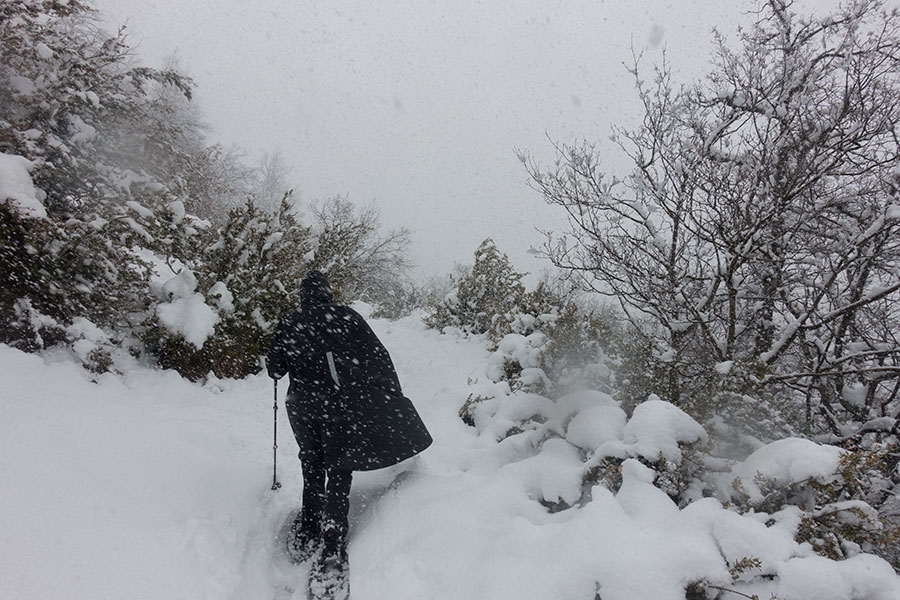
New snow and wind
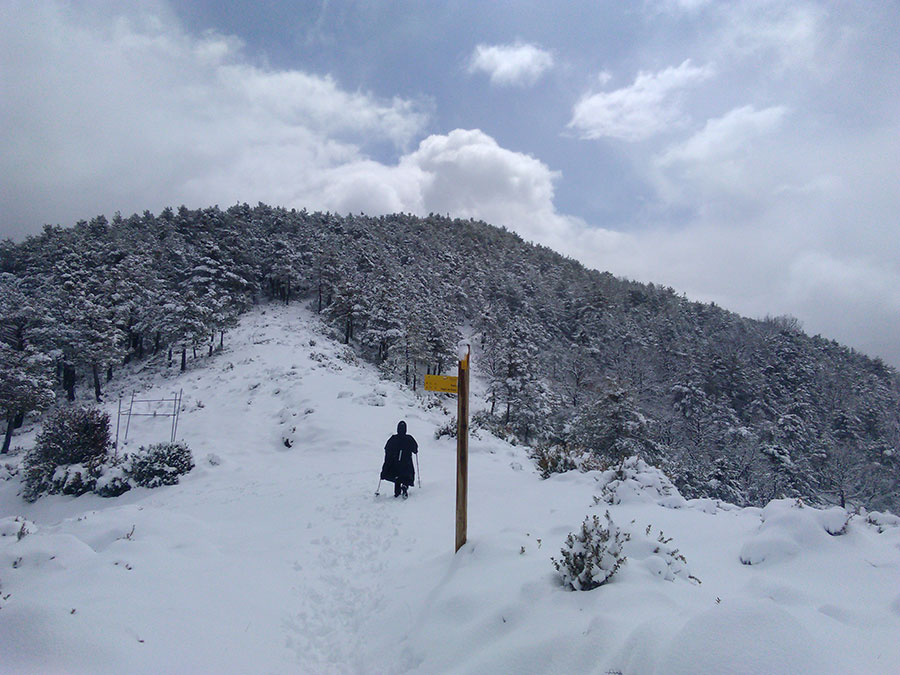
Blue sky. Didn’t last
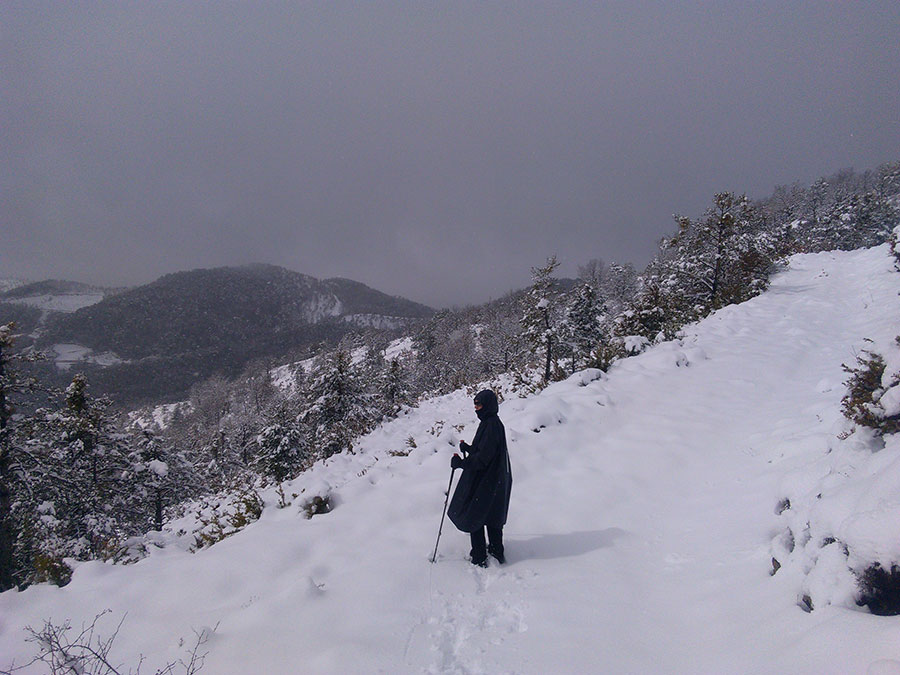
Light & darkness
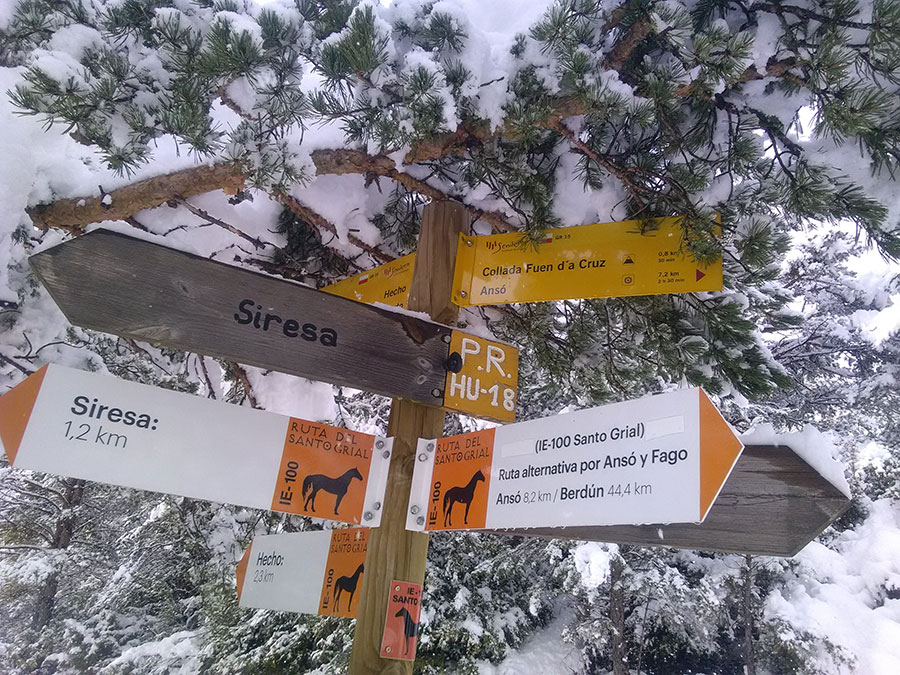
Signal overload
Food & Drink
Food is a very relevant issue across Iberia and it gets particularly interesting in the mountains. You get the most out of it when you spend the day hiking and come back feeling like you deserve something. You will find it.
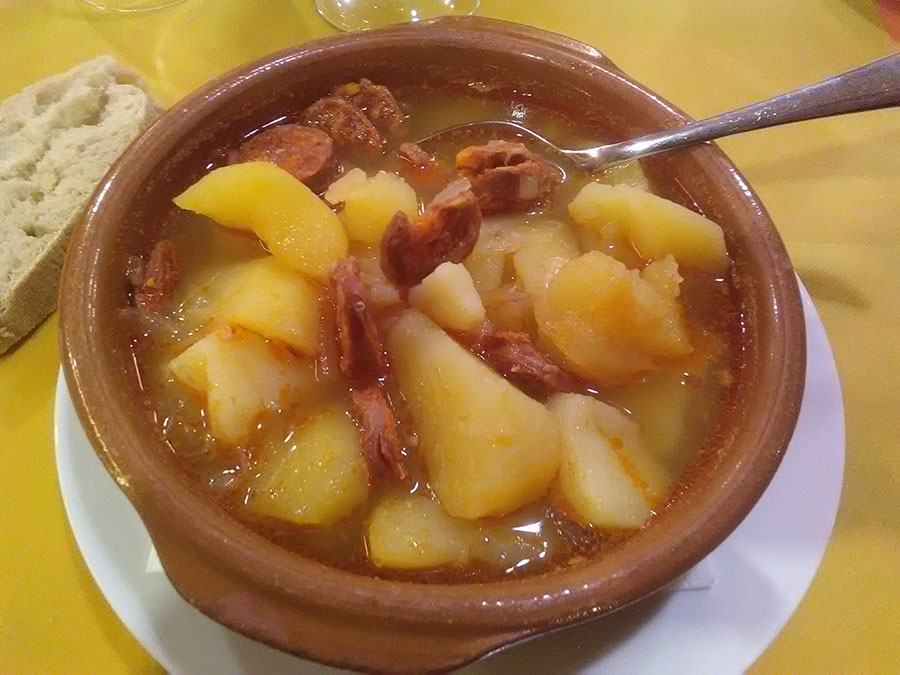
Potato & meat stew
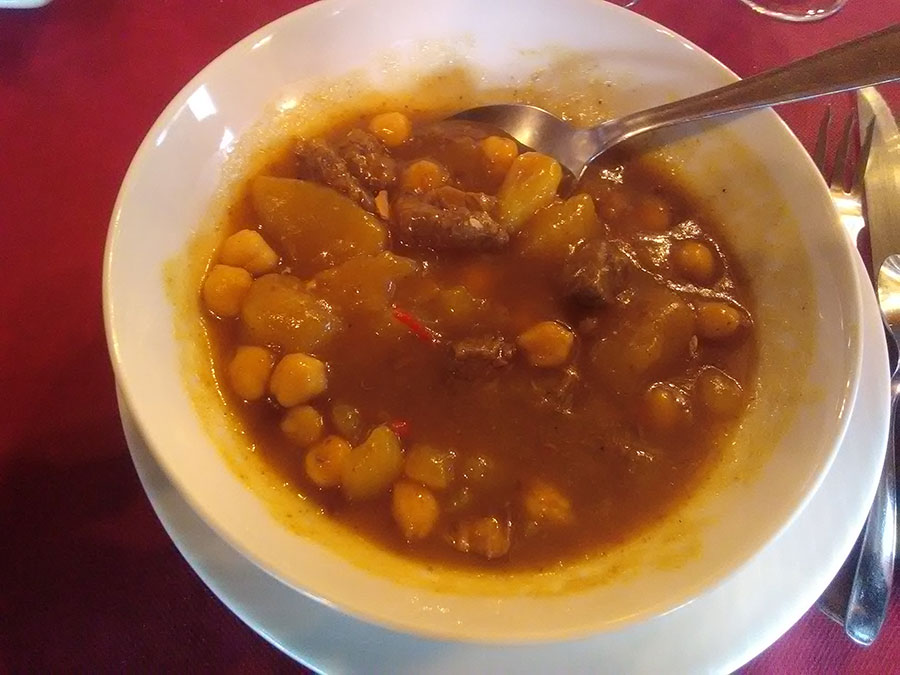
Beans, potato & meat
The most popular drink in the area is the Somontano wine whose name means “below/off the mountains”, grown in the nearby region the name implies. Make sure you try it on taverns and restaurants.
This very trip offered a very interesting find: a local beer, brewed in the valley:
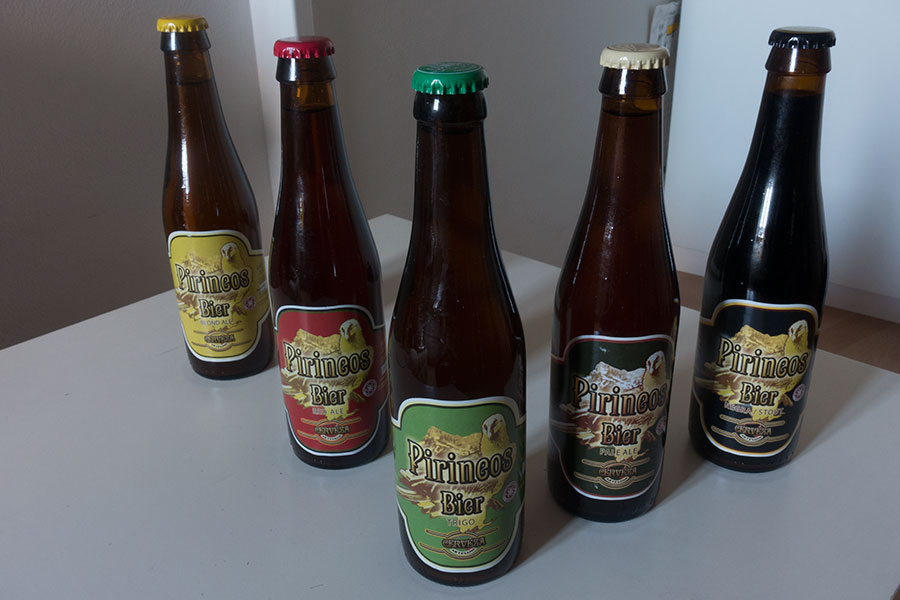
Local crafts
 RSS – Posts
Say what you want