
The gear in this trip was very similar to that in previous Norway visits but the conditions were somewhat different. In 2025 and along the divide, it was colder, windier and drier than anytime else. Gear performance is entirely dependent on the working conditions so there are still a few notes worthy of comment.
Full gear list in Lighterpack.com and Excel.
Shelter – Locus Gear Khufu
The wind performance in a tent is a coveted test that I’ll try my best to not go through. No matter how exposed the place is, and the hiking grounds in the Norwegian mountains tend to be very exposed, there’s always some mitigation possible and I’d apply every measure I could to minimize wind impact. Trip safety is first, gear wellbeing is second and test reporting would only be third.
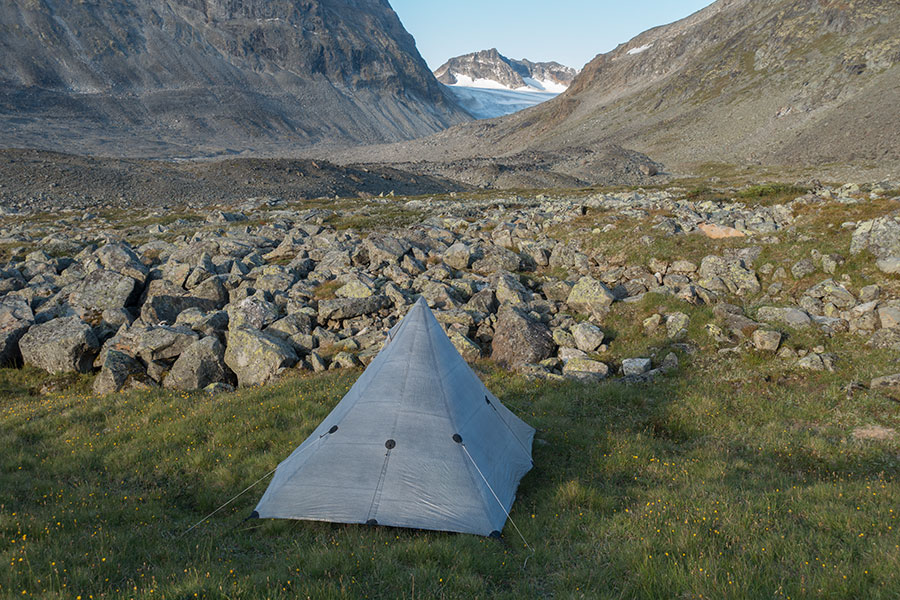
A very shallow depression set and all staking points in use
That said, the Khufu still had to take some wind in this trip and it did with no issues.
I estimate 40 km/h gusts, not sustained, which is not dramatic conditions but it’s some challenge for a tent that’s largely unframed, its wind performance depending entirely on a good pitch. That said, with the proper tension and using all staking points available (4 corners, 4 mid-panel, 4 mid-height ridge), the Khufu stood beautifully and never struggled.
I’ll keep waiting for a better test and hoping it never happens.
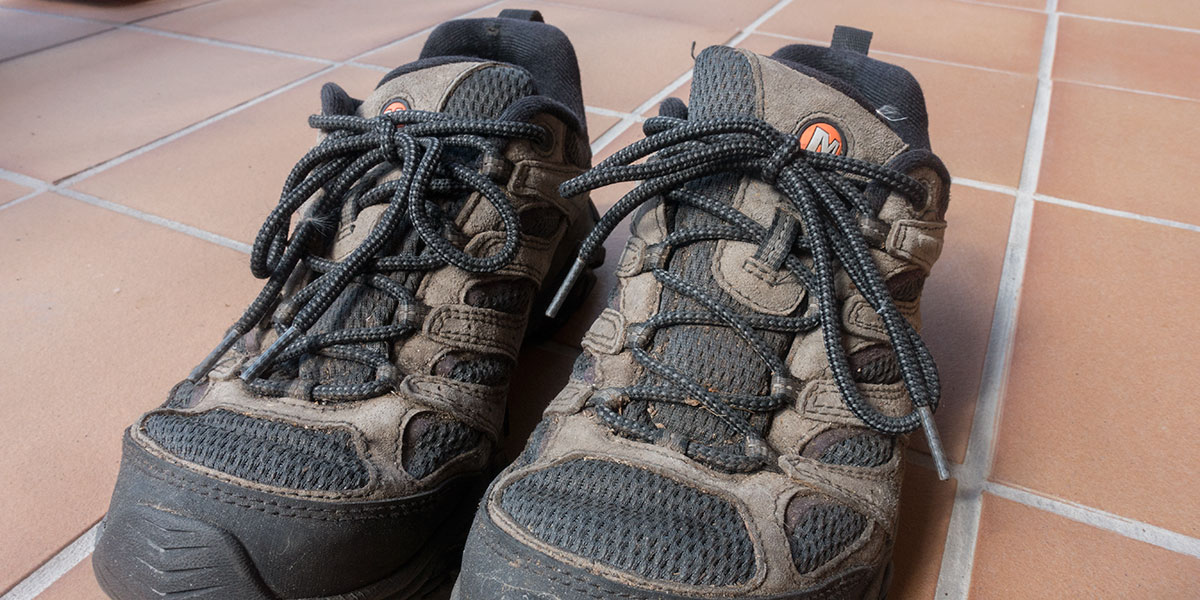
Shoes – Merrell Moab 3
After a few seasons using Salomon shoes, I’ve been back to Merrell. I usually go back and forth between the two, both reliable, well-fitting to my feet and locally available in models with the specs I look for, namely low-cut, simple, reasonably lightweight, not too minimal, non-waterproof shoes.
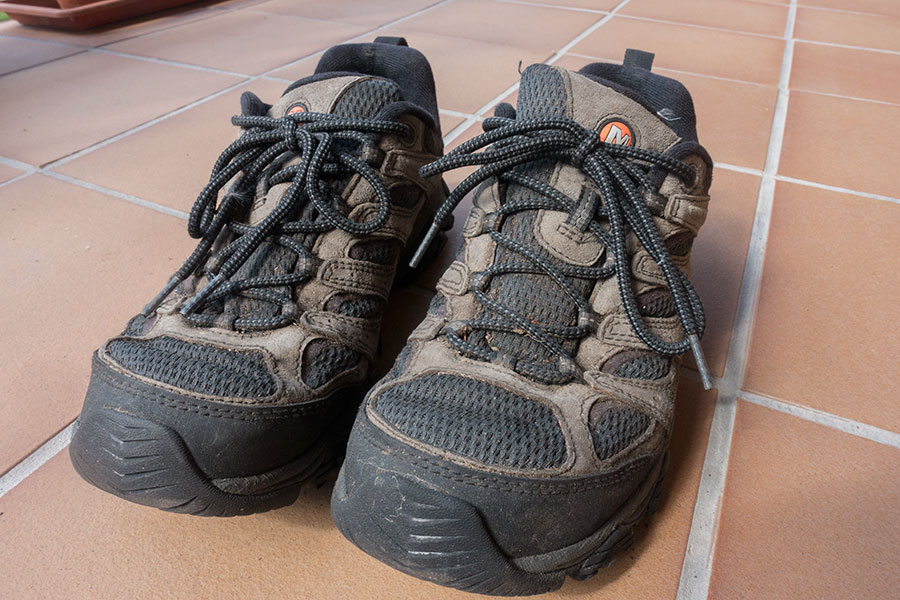
500 km later
I may be back to Salomon anytime but, for the time being, let me list a couple of very silly factors that made me enjoy the Merrell Moab model I wore in 2025 over the other brand’s predecessors.
Round section, grippy laces
Laces should be easy to tie and untie and they shouldn’t come undone unintentionally. The Moabs, as well as another Merrell model I’m currently using, have this well resolved. I trust it’s thanks to their rough surface. Then, the round section makes them also easy to grab and deal with. Once tied, I feel like I could leave them on for days without re-tying. In fact, I did (see next issue)
In general, flat laces are trickier to manipulate and, in my experience, they come undone more easily even though that’s probably due more to the type of surface than the type of section.
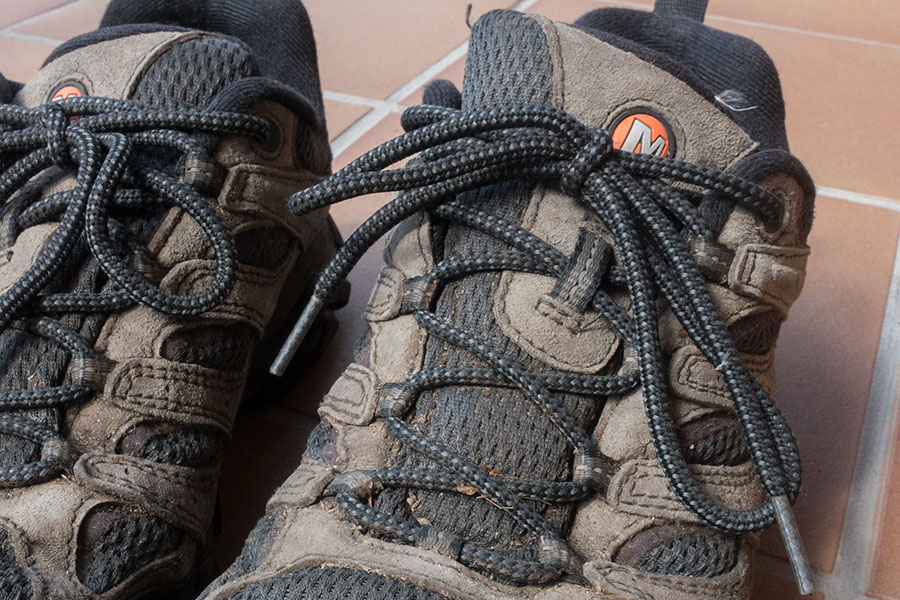
Round section, rough surface
It may be an extremely silly, uptight hiker kind of issue but I know how annoying it is to stop to redo laces. The committed long distance hiker will appreciate not needing to stop hiking as much as possible.
Easy to put on/take off without untying
I’m sure I’m not alone in this but, even if I am, let me say how much I appreciate the ability to put shoes on and take them off without dealing with laces at all. It may be more psychological than physical but it feels like a performance boost to be able to simplify those operations and make them quick.
Apart from the brand, it may also depend on the particular model but I feel this tends to be possible more often with Merrell shoes than it is with Salomon and there definitely must be something in the design to it. It could be argued that proper fit would require re-tying when putting the shoes back on but I feel I’m fine after just sliding the foot in. I can do this easily, no struggle at all with the Moabs.
Here again this may seem inconsequential but it may also be more important than it looks. An easy off/on operation will definitely encourage the hiker to do it more often and this is very good for feet health: clean debris as soon as it becomes a problem, uncage the feet at every stop opportunity, water them when meeting a stream and do any of this without much consideration for how long or how much wrestling it takes.
Gloves – Rab Xenon
These gloves are not new but deserve some mention after the good test I put them through on this trip.
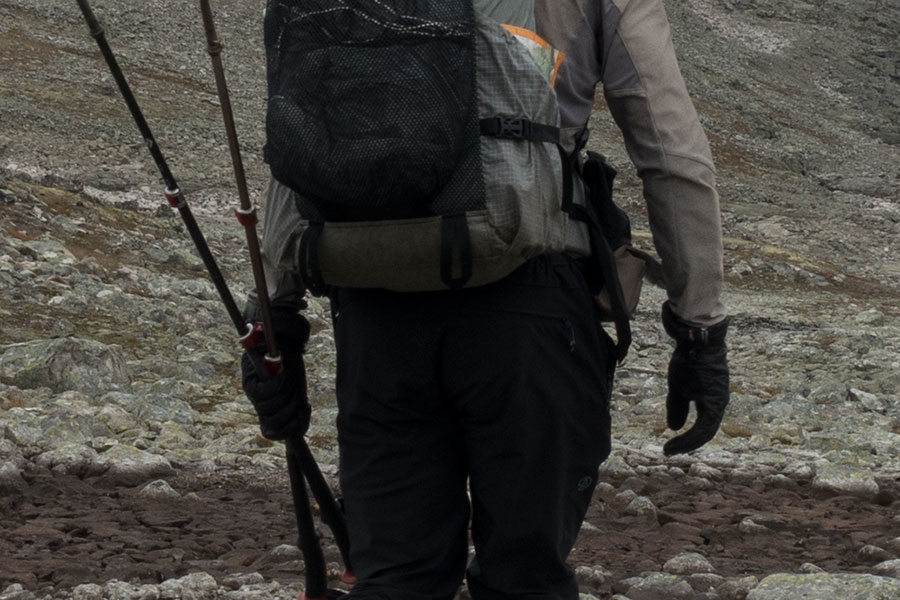
Warm hands
Gloves are a standard item for me in summer trips in the mountains, even if I know use time will be limited. Not so in this particular Norwegian summer, where it was cold enough for extended periods across many days for the gloves to be out of the pack more time than in.
This particular model is very good for the task. It’s a wind shell over fleece, which is a very good combo in an area that will be exposed if you are using poles. They’re not waterproof, which is fine, waterproofing the hands is a lost battle. They’re not high loft, which is fine so they’re not down to nothing when they get wet. It’s thin fleece so they’re not heavy and the shell cuts the wind and helps keep the warmth in.
They’re good for the typical, cold spell conditions in the summer mountains and they kept me comfortable throughout their use time on this trip.
Sleep system
I was using summer-rated versions of a closed cell foam pad and a down quilt, my usual team that’s kept me comfy across many trips, including those in Norway. I can accept being on the cold side of comfy on occasion but this time I was beyond that line more often than I’d consider acceptable.
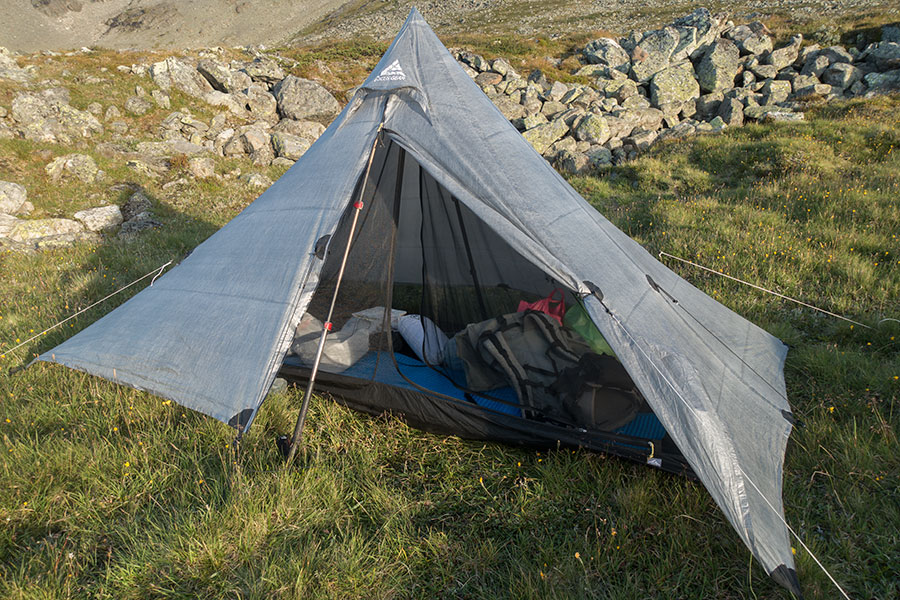
Sleeping quarters
I’m not sure what happened. It was certainly cold some nights but not particularly more than what you find on a headwater meadow in the Alps at the same time of the year. My best guess is the actual items are showing some age. On top and around, I’d wear clothing to supplement the quilt so I don’t think that was where the issue was so I tend to blame the pad.
This is important: we tend to focus on the sleeping bag, which is fine, it’s a very important item, but it’s relatively easy to add to if it can’t cope. The pad underneath, however, is much trickier to supplement.
Stakes
I often had to camp in rocky ground where staking in was tough. I carry 4 titanium nails that will save the day in such ground as they can safely be hammered on and there’s also the possibility of using them to make a pilot hole for the rest of the stakes. Y-section aluminum stakes are not good for pounding on.
Then, picture a tired hiker at the end of a long day who just wants to have the shelter up to get inside and finally relax. It’s too easy to try the quick way.
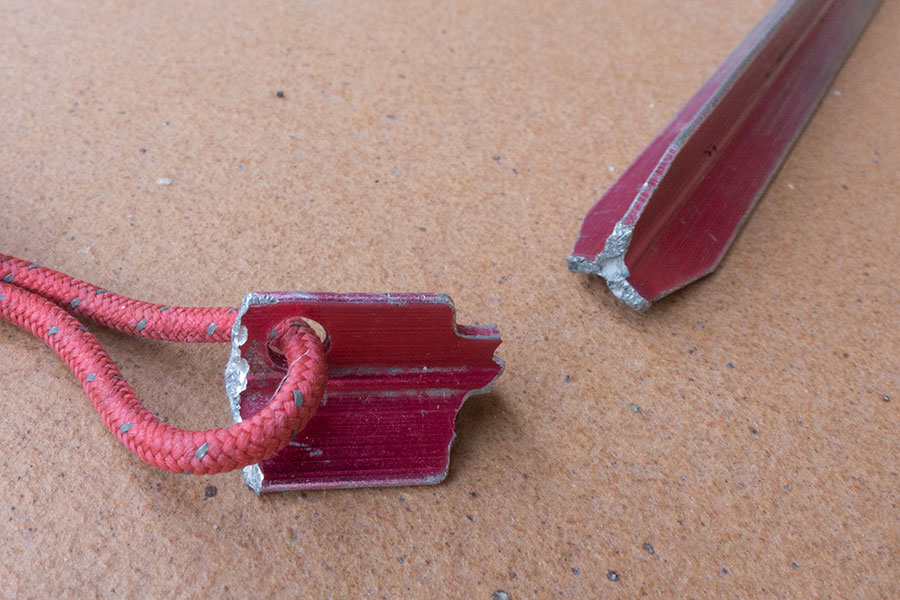
Obvious weak point
The stake won’t break but the notch is an obvious weak point. No matter how tired or how much in a hurry you are, avoid hammering on these stakes.
Waterproof double layering
This is about packing two waterproof tops that can work together and supplement each other. It’s high treason to the lightweight paradigms and probably overkill in most scenarios but something I tried for the first time in Norway on a trip previous to this one with not much success. This time around, I made changes.
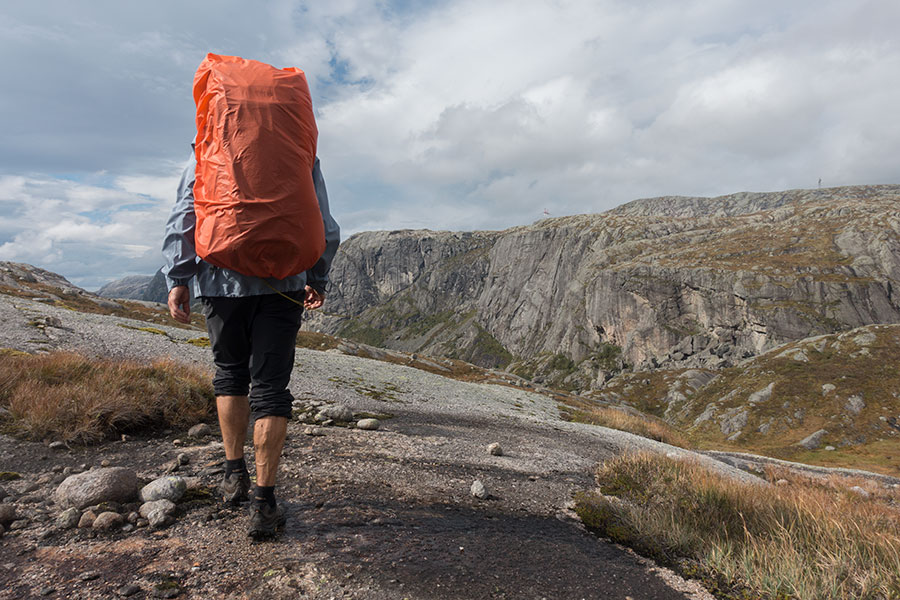
A lull in a rainy day, conventional single layer and no rain pants
Background: it can rain a lot in Norway, it can be cold and it will most likely be consistently exposed. The potential for misery is only lessened by the hut network. I felt I needed be more self-reliant than usual to feel confident about Norway long distance hiking. I first tried a relatively heavy duty waterproof top but this wasn’t enough. Then I tried adding a second one. It’s a battle I know I cannot win but maybe this could buy me some time. It didn’t work well enough, if only because I didn’t make a good choice for the second waterproof top.
In 2025, I kept my 3 layer anorak, arguably the best waterproof in my closet, but changed the poncho I had added for a cape that wouldn’t mean to go over the pack, which proved to be a problem. It worked well but this wasn’t a particularly rainy trip. I still see potential in the idea and will definitely apply it again whenever I travel in Scandinavian conditions but it definitely needs another test.
As if I needed a good excuse to be back in Norway.
 RSS – Posts
Say what you want