Viajar a pie

"Viajar a pie" is Spanish for "Travelling on foot"

Gear for the CDT

What do you need for a 5 month trip? The short answer is pretty much the same as for any other shorter one with one additional, important factor in that it may be a trip through the seasons and different climate areas.

A fine-tuned 3 season kit should do, the same as for a shorter journey but greatest attention must go into maximizing versatility so the gear can cope with a wide range of conditions. A 5 month trip will be a great test to the validity of the kit described below.

The case for convertible trousers

Zip-off convertibles are often disregarded as touristy items rather than serious hiking trousers. This is mostly a factor of the available designs more than the idea. Finding a well designed pair of convertibles may be a tough, frustrating shopping job but if you do find them they’re a very interesting item, particularly for thru-hiking, where you’ll need both shorts and full pants at different times along the way.

Rugged, thru-hiking worthy convertibles

There are other ways of having shorts and full lengthies but convertibles are best at minimizing the carried weight, which amounts to nothing when worn full and it’s very low when worn as shorts. Convertibles are also reasonably good at the transition either way. Fiddling with zips is often unwelcome but the alternatives -tights underneath, wind trousers on top- are not really any better.

And the case for non-stretchy fabrics

I miss the old fashioned, non-stretchy fabrics for trousers, so common around the turn of the century. It seems all meaningful fabrics nowadays have got some elastic built-in. Such fabrics may feel more comfortable to the movement but I don’t like how they wear and I particularly dislike how they cling to your legs. I like the breathing room of non-stretch fabrics. Such stuff seems difficult to find nowadays but this applies to both regular, long trousers and zip-offs.

In 2019 I’m thru-hiking big time and I’ve made an effort to find the best gear for my hiking style. I went shopping and I was too happy that I found a pair of properly designed convertibles in bi-component fabric with barely any stretch built into it. The bi-component fabric is great for a do-it-all garment, it may get uncomfortably warm in hot weather but that’s a price for a do-it-all that the forgiving legs can pay and you’d be wearing them as shorts anyway. The bi-component is great for cold or damp weather thanks to the excellent moisture transfer, the nice touch against the skin and the very limited stretch that tends to leave a gap and not feel suffocating.

I’ll be wearing them for 3000 miles so they better work well.

Continental Divide Trail Preview

I was at this point in life where life itself told me it was time for a break. Come such time, I have it clear what I need to do is hike.

Along the Continental Divide

Via Alpina 1 Stage 8: Bundalp to Adelboden

This entry is part 8 of 8 in the series Via Alpina 1
StartBundalp
EndAdelboden
Distance31 km / 19 m
PassesHohtürli, Bunderchrinde

I wake up wondering if I’ll be fit for walking today. It’s difficult to say when nothing really hurts and a resting position makes everything feel right. Straight off bed I feel weak but that may be normal. I decide to give breakfast a go and see how it feels. It went down this well:

Alp breakfast

Via Alpina 1 Stage 7: Lauterbrunnen to Bundalp

This entry is part 7 of 8 in the series Via Alpina 1
StartLauterbrunnen
EndBundalp
Distance24 km / 15 m
PassesSefinenfurkke

For the first time in the trip, the day starts overcast. Chance of rain in the morning, getting dryer in the evening. Me, climbing right away, pretty much off the hostel door and up the glacial escarpment with interesting views back to Lauterbrunnen.

Lauterbrunnen from the other side

Via Alpina 1 Stage 6: Wetterhorn to Lauterbrunnen

This entry is part 6 of 8 in the series Via Alpina 1
StartWetterhorn base
EndLauterbrunnen
Distance29 km / 18 m
PassesGrosse Scheidegg, Kleine Scheidegg

After the early night thunderstorm, the morning is crisp and clear. The Wetterhorn is still there.

Dawn on the Wetterhorn

Via Alpina 1 Stage 5: Engstlensee to foot of the Wetterhorn

This entry is part 5 of 8 in the series Via Alpina 1
StartEngstlensee
EndWetterhorn foot
Distance33 km / 20 m
PassesNone

I’m glad I slept under tree cover, the Alps are a surprisingly damp place! but my shelter is mostly dry in the early morning and I didn’t need to compromise on views.

Dawn on the Engstlensee, Jochpass at the far end

Via Alpina 1 Stage 4: Brüsti to Engstlensee

This entry is part 4 of 8 in the series Via Alpina 1
StartBrüsti
EndEngstlensee
Distance36 km / 22 m
PassesSurenenpass, Jochpass

Morning is brilliant blue and it doesn’t take as long as on previous mornings for the light to shine, it’s the first time on the trip that I don’t sleep on the valley floor. I couldn’t arrange for tree cover overhead for the night but my shelter is dry nevertheless. Surenenpass is still there and it’s my next milestone.

Trailstar in the meadow, Surenenpass at the far end

Via Alpina 1 Stage 3: Urnerboden to Attinghausen and beyond

This entry is part 3 of 8 in the series Via Alpina 1
StartUrnerboden
EndBrüsti - Attinghausen
Distance33 km / 20 m
PassesKlausenpass

In the morning, as expected, everything is dripping wet and I need to leave well before the sun shines so I pack a wet mess and a good excuse for an extended break in the sun later on the day. The setting is not idyllic, too close to human habitation but the valley is beautiful and very well worth a camp pic:

Dawn in Urner Boden

Via Alpina 1 Stage 2: Elm to Urnerboden

This entry is part 2 of 8 in the series Via Alpina 1
StartElm
EndUrnerboden
Distance42 km / 26 m
PassesRichetlipass

Morning is dark inside the thick conifer woods where I’m camping just outside Elm village. I go through town in daylight but still well before the sun rises above the mountain tops. My legs are sore from day 1 efforts that no amount of stretching could heal but as soon as I warm them up, I can walk with reasonable dignity.

Morning in the conifer woods

Via Alpina 1 Stage 1: Sargans to Elm

This entry is part 1 of 8 in the series Via Alpina 1
StartSargans
EndElm
Distance36 km / 22 m
PassesFoopass

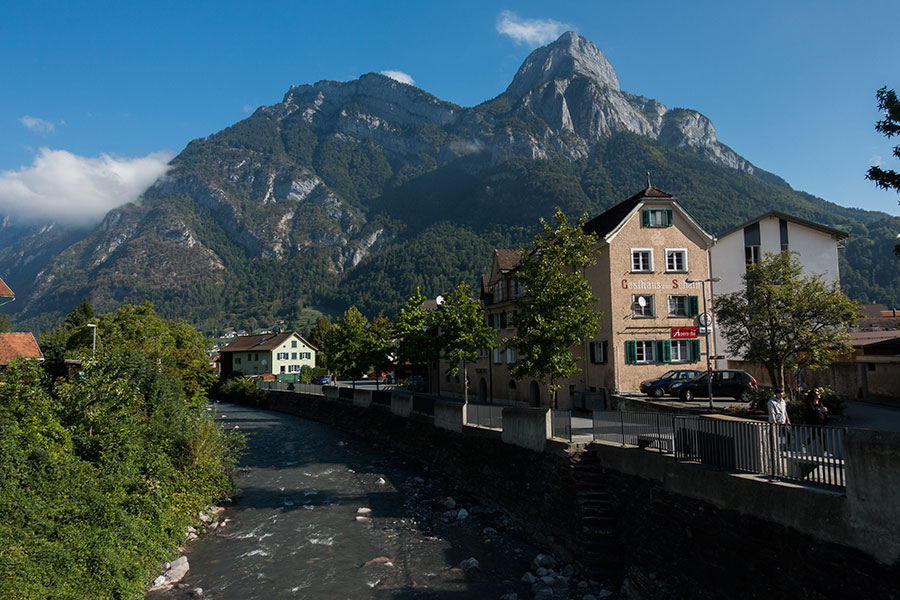
Sargans and nearby Mels sit in a wide, oddly flat valley confluence flanked by high peaks. The Via Alpina 1 enters the mountains along the Weisstannental in a course due west. This valley is narrow and deep, with a public road near stream level. The trail takes a different course on the upper floor, i.e. it makes an initial climb to the south-side slopes, then traverses along, linking the small communities and farms clinging to the hillside.

The Seez in Mels

2018 in pictures

A year of travels in snow, tarmac, rock & dirt summarized in 17 pics.

2018 started with a big dump on the Guadarrama hills. We went out for a bimble, oddly unaware of the chaos that ensued when major roads blocked and thousands were trapped, wondering where everybody was while we had the hills for ourselves for hours of falling powder and silence. It was magic.

Guadarrama

Via Alpina 1, the passes

It used to be called the Alpine Pass Route so you can bet the passes are an important feature. They always are on mountain terrain! They’re the main landmarks to help us break the trail down into meaningful stages, they’re the double-side viewpoints and they decide where the water goes. This is a power list of the passes I crossed on the Via Alpina.

Via Alpina 1 Description

Via Alpina 1 is the newer name for the trail formerly known as the Alpine Pass Route. It goes East to West along the northern edge of the Swiss Alps from Liechtenstein to Lac Leman for a length of about 360 km, more or less depending on a few existing options.

Via Alpina 1 Deep Impressions

The Via Alpina 1, also known as the Alpine Pass Route goes east to west across Switzerland through the Glarner and Berner sections of the Alps for about 360 km, give or take some depending on options and starting point. I hiked along in mid September, 2018 with the loose, ambitious idea of completing it in a week. I didn’t make it to the opposite end but I did make a lot of other stuff. This here is a list of the aspects that left a lasting impression on me. It’s about the land, the mountains and the trail and it’s mostly about myself and how I was feeling at the time.

Via Alpina 1 Preview

Starting mid September, I’ll be hiking on the Via Alpina 1 all the way across Switzerland. Background, motivation and rough plan below.

Trash in nature

If you’re sensitive about finding trash in nature, you’ll be familiar with some or all of these common feelings: anger, disgust, perplexity, sadness, frustration… Chances are you have wondered what you can do to avoid this happening and you have probably taken action some time, scale big or small.

Banana peel, a timeless classic

This is an analysis of the issue together with some possible action points.

Wildlife and Attitude

  • What do you do about the bears?
  • I talk to them

This was an actual conversation. The answer may not be the most glamorous around but that’s what I found myself saying and it felt to me as very meaningful at the time. It still does.

Hecho Valley

The Hecho valley is on the Western Pyrenees. It’s the westernmost pyrenean area of consistently dramatic mountain scenery and some features make it special: there are no through roads across the range and there are no ski resorts. It is a wild and quiet place. What the mountains are meant to be.

Newfoundland IAT Credits

This one goes to those characters that deserve a mention after all the help, the concern and the good vibes I got from them. Roughly in order of appearance as the story went:

Newfoundland IAT Resources

There’s not much information on this route on the net, nothing in print as far as I’m aware. These below are the best resources I found along the way. The information is up to date at the time of writing (March 2018)

St. John’s

This entry is part 5 of 5 in the series International Appalachian Trail Newfoundland

I fly into St. John’s in the very early morning, then fly home late at night. What can you do for a full day in St. John’s when you can barely walk1?

St. John’s is a lovely town with super nice summer weather. If airline schedules mean I have to spend a day here, it’ll be a great time no matter what.

St. John’s harbour

Newfoundland IAT Section 4: Northern & Long Range Traverse

This entry is part 4 of 5 in the series International Appalachian Trail Newfoundland

The Northern Traverse and the Long Range Traverse are the two flagship wilderness routes in the Gros Morne National Park. They’re a great way of experiencing the highlands of the Long Range Mountains in a sort of controlled environment while keeping the wilderness flavor. The area is high enough for the vegetation to be passable so all you need is an access trail from the lowlands, then you’re good to go.

This section is bound to be the grand finale for my Newfoundland trip. It will include the now popular Long Range Traverse, that I already hiked in my previous visit in 2003, and the Northern (formerly North Rim) Traverse. I have a limit of 5 full hiking days that will account for days 12 to 16 of my trip.

Newfoundland IAT Section 3: Bonne Bay

This entry is part 3 of 5 in the series International Appalachian Trail Newfoundland

This section was a necessary transition in both space and time. I didn’t want my trip to become a series of unconnected multi-day hikes, I wanted my trip to be a real A to B. I could accept the exception of the Bay of Islands gap, even if half of it was an overland detour rather than a water crossing but I kept to my compromise of hiking every bit that was on my intended line of travel and was not over water.

Now I needed to get myself from Trout River to Rocky Harbour, Western Newfoundland.

To Rocky Harbour

2017 in pictures

Seasons and chronology fit the story fine. This is how my 2017 looked like:

Newfoundland IAT Section 2: North Arm Hills

This entry is part 2 of 5 in the series International Appalachian Trail Newfoundland

The second section of my IAT trip goes across the North Arm Hills, a group of mountains north of the Bay of Islands in Western Newfoundland.

Newfoundland IAT Section 1: Lewis Hills & Blow-me-Down Mountains

This entry is part 1 of 5 in the series International Appalachian Trail Newfoundland

The first section of my hike on the Newfoundland IAT2 goes across two mountain groups: the Lewis Hills and the Blow-me-Down Mountains. Wild and remote country in western Newfoundland.

Navigation New Order

My trip in Newfoundland was heavily impacted by the loss of all my checked-in luggage, i.e. most of my stuff. One of the things I lost was my paper maps and one of the things I saved was my smartphone.

Navigation set, 20th & 21st centuries

I could have worked hard to get new (paper) maps before I started hiking but I had so many things to replace that this one was not high on the scales: there was a valid alternative.

Newfoundland IAT, Gear Review

This was bound to be the typical trip gear review article until something unexpected happened: I lost nearly all my gear on the flight into Newfoundland. I couldn’t do gear review articles without gear so I set out, got a whole new kit on the spot and I went hiking with it. Then, this otherwise typical review article got somewhat wicked and probably a lot more interesting.

Chart from lighterpack.com

Newfoundland IAT, a personal take

Newfoundland is a very special place that I want to try to portray as best as I can from the perspective of my trips there. Before I dive into gear technicalities or the depths of trail diaries, I want to put together some impressions and thoughts. This is a very personal account of my experience while hiking in Newfoundland, the Long Range Mountains and the International Appalachian Trail. It’s all here: the good, the bad and the beauty.

When plans go wrong, make new ones

In July-August 2017 I had a finely tuned plan to hike the International Appalachian Trail in Newfoundland. It was devised as a rather open, do-as-you-go idea from the moment I’d set foot on the trail but carefully designed to minimize travel time to the trail head. It all went down the drain when the St. John’s airport belt stopped and my pack didn’t show up. Then a whole new trip began.

Boarding everybody but not everything

Newfoundland IAT Overview

If you’ve ever wondered what kind of a place Newfoundland is for hiking and backpacking, you can find here some general info on the island and insights into the Long Range Mountains and the International Appalachian Trail as it goes along.

Climbing out of canyons on the Newfoundland IAT

Newfoundland IAT Highlights

This is an initial, quick summary of what this trip has meant for me.

Hiking in Newfoundland

Newfoundland IAT Gear Preview

I’ll be hiking in Newfoundland in the summer of 2017. If you’d ever wonder which gear a lightweight, long distance backpacker would take to a place like Newfoundland, you can see my version here.

TrailStar floor, the making

A groundsheet is a relatively simple project. Getting the geometry right and sewing good quality seams is not as critical as with a tarp because there’ll be no tension applied and it won’t need to stand to any wind force. Just get the dimensions about right and sew away.

DIY TrailStar floor

TrailStar Floor, background and design

Floor for the TrailStar

I’ve been paring the TrailStar with generic ground cloths that I’d been using with other tarps / floor-less shelter systems over the years. This scheme works well and it’s very adaptable:

The Outdoor Smartphone

You know the story: smartphones became mini-computers with a wireless connection to several networks, GPS among them and this is when things got interesting for outdoor route finding. Smartphones became a valid alternative to the dedicated GPS devices.

This is evolution

Newfoundland 2017 Route Plan

My intended route will be based on the International Appalachian Trail / Sentier International des Appalaches (IAT/SIA) as it goes along the western flank of Newfoundland all the way from Port aux Basques in the south to L’Anse aux Meadows at the northern tip of the western Peninsula. I plan to take the high level alternative wherever there is one as well as some other highland traverses that are not part of the IAT/SIA official selection.

Newfoundland 2017

During the summer of 2017 I’ll be hiking in Newfoundland over the International Appalachian Trail (IAT) starting from the southern end in Port Aux Basques and going as far north as I can.

2016 in 19 pictures

Chronological highlights of the year while travelling by human power.

Pack Smart: Sunglasses

This is one of those small things that matter from a packing efficiency perspective. It is actually a very silly, common sense little topic but where market trends may easily lead us to the dark side.

Emstrur to Skogar

This entry is part 13 of 13 in the series Iceland North to South

Distance covered: 27 miles

Today there’s two distinct sections: first I need to finish the Laugavegur, a mostly downhill affaire to the coastal valley of Thorsmork. Then, the steepest, longest climb of the trip to go over the Fimmvorduhals pass and down to trip end in Skogar. The potential for trouble lies in this second half with a pass above 1000 metres and a stormy forecast.

Landmannalaugar to Emstrur

This entry is part 12 of 13 in the series Iceland North to South

Distance covered: 23 miles

You can get up as early as you want in the Iceland summer. I never got a precise account of what time the sun did rise but I think some “nights” I got to feel ambient light around 3 am before turning back to sleep. Most nights I’m on my own and don’t relate to anyone so it’s not obvious whether I got up early or not if I don’t look at the watch. Today I’m in a tent town that’s still quiet and still when I leave. It must be early even though we’re in full daylight. It’s clear and bright and I get ready for a memorable hiking day.

Krokslon to Landmannalaugar

This entry is part 11 of 13 in the series Iceland North to South

Distance covered: 19 miles

The day starts dark and moody. Rain spares my packing up but that’s all the respite I get as it soon starts coming down. I’m in high ground so I can see far to south and west and all I see is dark cloud. I get mentally ready for a wet march to Landmannalaugar.

Storaver to Krokslon

This entry is part 10 of 13 in the series Iceland North to South

Distance covered: 33 miles

Now that I’m fully aware of how important the weather still is, my first, early morning thought is for a sky update, pee and breakfast will come only later. It turns fairly quiet, cloudy but not overcast and it doesn’t rain. That’s good enough. Let’s go hiking.

Hagongulon to Storaver

This entry is part 9 of 13 in the series Iceland North to South

Distance covered: 30 miles

I’m now where I dreamt to be when I left Myvatn a long time ago (that’s 4 days). It’s been no death march to get here, in fact it was fairly quiet with some glorious times along the way. Now there’s no expected obstacles to get to the F26, once there I’m in relative safety no matter the weather. I feel less vulnerable. That means I’m less worried by an early morning overcast. Now I’ve got some miles to do.

Gaesavotn to Hagongulon

This entry is part 8 of 13 in the series Iceland North to South

Distance covered: 25 miles

I get my promised good weather window, it is calm and sunny in the morning. My first sunny day in Iceland 2016!!! Look at that blue sky:

Brilliant blue skies at last. Vatnajokull hides behind low cloud

Odadahraun (Somewhere in there) to Gaesavotn

This entry is part 7 of 13 in the series Iceland North to South

Distance covered: 32 miles

The weather is still mostly clear when I wake up in the morning. Where’s all that forecasted rain? I don’t want to know. I’m delighted to be able to feel relaxed and eager to start the day’s hiking, first time on this trip that I feel that way. At this stage, my first encounter with the outcome of sandy ground camping is nothing but a minor inconvenience. I’ll need to get used to this black sand all over the place. I feel for the tent but it’s its job after all.

Botni to Odadahraun (middle of nowhere)

This entry is part 6 of 13 in the series Iceland North to South

Distance covered: 28 miles

The problem with staying in such a nice hut is that it’s difficult to leave but I have that one clear, early wake-up call and no room for doubt. The weather seems to resume where it left it the day before which is not that bad of a news. It is demanding weather to be outside but far from my fear induced nightmare dreams. It is cloudy, windy, cold and generally unsettled but it is not raining consistently and there are even occasional spells of brightness.

Myvatn to Botni

This entry is part 5 of 13 in the series Iceland North to South

Distance covered: 30 miles

I set out in death-march mood. The sky is severely overcast but at least it’s not raining yet. This is a big help for a start.

Dark day in Myvatn

Page 2 of 4

Powered by WordPress & Theme by Anders Norén & All content by Iñaki Diaz de Etura unless otherwise stated